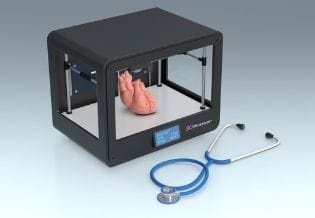
Submit Your Additive Manufacturing Research
Join leading researchers advancing 3D printing technology, materials science, and fabrication innovation. Your breakthrough in additive manufacturing deserves a platform that understands your field.
Complete your submission in approximately 15 minutes
Two Convenient Submission Methods
We offer flexible submission options designed to match your workflow preferences. Choose the method that works best for your research submission needs.
ManuscriptZone Portal
Our comprehensive manuscript management system provides complete control over your submission from start to publication.
- Real-time submission status tracking
- Auto-save functionality prevents data loss
- Direct access to reviewer comments
- Guided workflow for complex submissions
- Revision management tools
- Communication hub with editors
Best for: Multi-author papers, complex manuscripts with extensive supplementary materials, researchers who want full visibility into the review process.
Submit via ManuscriptZoneQuick Submission Form
A streamlined submission process for straightforward manuscripts that gets your research into review faster.
- No account registration required
- Simple, single-page form
- Fast submission process
- Ideal for time-sensitive research
- Direct manuscript upload
- Immediate confirmation
Best for: Single-author papers, straightforward research articles, rapid communications, researchers preferring simplified workflows.
Use Quick Submission FormArticle Types We Publish
3D Printing and Applications welcomes diverse manuscript types that advance our understanding of additive manufacturing technologies, materials, and applications. Each submission undergoes rigorous peer review by experts in manufacturing engineering and materials science.
Original Research Articles
Comprehensive studies on novel 3D printing processes, material development, process optimization, mechanical characterization, or fabrication methodologies.
Technical Notes
Focused reports on innovative printing techniques, material formulations, post-processing methods, or quality control procedures in additive manufacturing.
Review Articles
Comprehensive analyses of current state-of-the-art in specific 3D printing technologies, materials classes, or application domains with critical evaluation.
Methods & Protocols
Detailed descriptions of novel experimental procedures, characterization techniques, testing protocols, or standardized methods for additive manufacturing research.
Case Studies
Real-world applications of 3D printing technologies, implementation challenges, solutions, and performance evaluations in industrial or research settings.
Rapid Communications
Time-sensitive findings, breakthrough discoveries, or preliminary results in additive manufacturing that warrant immediate dissemination to the research community.
Research Focus Areas: Polymer printing • Metal additive manufacturing • Ceramic 3D printing • Bioprinting materials • Composite fabrication • Process monitoring • Quality assurance • Post-processing techniques • Material characterization • Mechanical testing • Microstructure analysis • Process optimization
Pre-Submission Checklist
Ensure your manuscript meets all requirements before submission to expedite the review process and avoid unnecessary delays.
Required Elements
- Manuscript prepared in Word (.doc/.docx) or LaTeX format
- Title page with all author names, affiliations, and corresponding author contact
- Abstract (250-300 words) summarizing objectives, methods, results, and conclusions
- Keywords (4-6 terms) relevant to additive manufacturing and your specific research area
- Figures prepared as high-resolution files (TIFF or EPS format, minimum 300 DPI)
- Tables formatted clearly with descriptive captions
- References formatted according to journal style guidelines
- Cover letter addressing the significance and novelty of your research
- Competing interests statement (if applicable)
- Ethics approval documentation (if research involves human subjects or animals)
- Supplementary materials organized and clearly labeled
- All co-authors have reviewed and approved the manuscript
Technical Specifications: Ensure all experimental data includes sufficient detail for reproducibility. Material specifications, processing parameters, testing conditions, and measurement protocols should be clearly documented. Include statistical analysis methods where appropriate.
Peer Review Timeline
We maintain transparent, efficient review processes with clear timelines at each stage. Our expert reviewers in additive manufacturing and materials science provide constructive feedback to enhance your research.
Submission & Initial Screening
Your manuscript undergoes completeness check, plagiarism screening (iThenticate), and scope assessment by the editorial team.
3 daysEditor Assignment
An associate editor with expertise in your specific area of additive manufacturing is assigned to manage the peer review process.
2 daysPeer Review
Typically 2-3 expert reviewers evaluate your manuscript for technical rigor, novelty, methodology, and contribution to the field.
21 daysEditorial Decision
The editor reviews all feedback and makes a decision: Accept, Minor Revisions, Major Revisions, or Reject. You receive detailed reviewer comments.
28 days totalRevision & Re-review
If revisions are requested, submit your revised manuscript with a detailed response to reviewers. Re-review focuses on how you addressed the comments.
14 daysAcceptance & Production
Upon acceptance, your manuscript enters production for copyediting, formatting, and final publication preparation.
10 daysPublication
Your article is published online with immediate open access, making it instantly available to the global additive manufacturing community.
~60 days totalFast-Track Option: Rapid Communications receive expedited review (14 days) for time-sensitive breakthrough findings in 3D printing technology. Contact the editorial office to request fast-track consideration.
Why Researchers Choose J3DPA
Expert Peer Review
Reviewers with specialized expertise in additive manufacturing, materials science, and mechanical engineering provide constructive, field-specific feedback.
Rapid Publication
Average 60 days from submission to publication. Fast-track available for breakthrough research requiring immediate dissemination.
Global Visibility
Indexed in major databases including Google Scholar, and discipline-specific repositories for maximum research impact.
Open Access
Immediate, unrestricted access to your research worldwide. No paywalls limiting your work's reach to the manufacturing and engineering communities.
Ethical Standards
COPE (Committee on Publication Ethics) Norms. Rigorous plagiarism screening, transparent peer review, and commitment to research integrity.
APC Waivers Available
Financial support options for researchers from developing countries and those without institutional funding. Quality research should not be limited by finances.
Manuscript Preparation Guidelines
Structure Your Manuscript
For original research articles in additive manufacturing, follow this recommended structure to ensure clarity and completeness:
- Introduction: Background on the 3D printing technology or material, research gap, objectives, and significance to the field
- Materials and Methods: Detailed description of materials used, printing parameters, equipment specifications, characterization techniques, and testing protocols
- Results: Present findings with appropriate figures, tables, and statistical analysis. Include process parameters, material properties, mechanical testing data, or microstructural analysis
- Discussion: Interpret results in context of existing literature, explain mechanisms, discuss limitations, and implications for additive manufacturing practice
- Conclusions: Summarize key findings, practical applications, and future research directions
- Acknowledgments: Funding sources, technical assistance, and facility access
- References: Cite relevant literature in additive manufacturing, materials science, and mechanical engineering
Technical Requirements
- Figures: High-resolution images (minimum 300 DPI) showing printing processes, material microstructures, mechanical test results, or fabricated parts. TIFF or EPS format preferred.
- Tables: Clearly formatted with descriptive captions. Include processing parameters, material properties, mechanical test data, or comparative analyses.
- Supplementary Materials: CAD files, additional characterization data, video demonstrations of printing processes, or extended datasets can be included.
- Data Availability: Statement on how readers can access underlying research data, following FAIR principles where applicable.
After Submission: What to Expect
Immediate Confirmation
You will receive an automated confirmation email with your manuscript tracking number within minutes of submission. This number allows you to monitor your submission status through the ManuscriptZone portal.
Editorial Screening (Days 1-3)
Our editorial team conducts initial screening to verify completeness, check for plagiarism using iThenticate software, and assess fit with journal scope. Manuscripts with similarity index above 30% are returned for revision before peer review.
Peer Review Process (Days 4-28)
Your manuscript is sent to 2-3 expert reviewers with specialized knowledge in your research area. Reviewers evaluate technical soundness, novelty, methodology rigor, and contribution to additive manufacturing knowledge. You can track reviewer assignment and review progress through your submission portal.
Decision Notification
You receive the editorial decision with detailed reviewer comments. Possible outcomes include:
- Accept: Manuscript proceeds directly to production
- Minor Revisions: Small changes required, typically re-reviewed by editor only
- Major Revisions: Substantial changes needed, manuscript returns to reviewers
- Reject: Manuscript does not meet publication standards, with constructive feedback provided
Revision Submission
If revisions are requested, prepare a detailed point-by-point response addressing each reviewer comment. Highlight changes in your revised manuscript. Submit through the same portal using your original manuscript ID.
Publication
Upon acceptance, your article enters production for professional copyediting and formatting. You will receive proofs for final approval before publication. Once published, your research is immediately available open access to the global community.
Ready to Share Your Additive Manufacturing Research?
Join researchers worldwide advancing 3D printing technology through rigorous, peer-reviewed publication. Our editorial team is here to support you throughout the submission and review process.
Begin Your SubmissionQuestions about the submission process? Contact our editorial support team at [email protected]
Editor in chief